Student Expat PTY LTD

Uncategorized

Uncategorized

Australia Relaxes Visa Rules to Address Labour Shortage

Australia has been facing the problem of shortage of skilled workers for a long time. Federal government has announced that there is a demand for construction managers, chefs, and nurses, among the ten jobs. Australia needs more workers for these jobs and the answer is relaxed immigration policies Quality Delivered @ Team of Qualified Professionals We are having qualified education consultants with numerous hours of work experience with a 99% success rate. Presently, we are having two branches in Australia. Our head office is in Brisbane, Australia and the second branch is in India. Our dedication and commitment are reflected in our day to day work. We have earned a reputation and leadership in our services through the knowledge, expertise, wisdom and competency acquired during all these years We shape our clients’ careers with extra care and responsibility. Our team prides itself on its unique backstory, which allows them to understand your needs and challenges better when navigating through the migration process. Regardless of whether you’re moving to Australia temporarily or permanently, contact us for an honest, expert advice and services for a stress-free migration experience.

Uncategorized

Hike in Visa Fees

Visa Application Charges (VACs) have also been adjusted in line with the 2023-24 forecast CPI. The changes are as follows:- Visa Type Subclass Before From 1 July 23 Partner visa 820/801 & 309/100 $8,085 $8,850 Skilled visas 189/190/491 $4,240 $4,640 Graduate 485 $1,730 $1,895 Student 500 $650 $710 Working Holiday 417/462 $510 $635 TSS (Short Term) 482 $1,330 $1,455 TSS (Long Term) 482 $2,770 $3,035 ENS 186 $4,240 $4,640 Investor stream 188 $9,195 $13,860

Uncategorized

Extended Stay for Subclass 485 Visa Holders

International students after completing eligible qualification in areas such as engineering, healthcare, medicine, science and technology will have extension in post-study way. The duration of stay will increase as follows:- two years to four years for Bachelor degrees three years to five years for Masters degrees four years to six years for all Doctoral degrees

Uncategorized

Occupation & Skills Assessment – Graduate Work Stream

From 1 July, 2023, For Graduate Work stream visa application, applicants must hold a qualification relevant to the occupation listed in MTSSL and must undergo a Skills assessment in the nominated occupation. Strong Commitment of Government to Skill Migration For addressing the increased demands of skilled professionals, Government has allocated 30,375 visa places for the 2023-24 Skilled Independent program. In previous year, 66000 invitations were issued for the Subclass 189 visa. By offering opportunities Government encourages skilled migration to contribute in development of Australia.

Uncategorized

The Varying Terrain of Australian Student Visas-Picking the Best Option for You

The Australian education system is one of the most sought-after in the world, and multiculturalism attracts international students to Australia, where they can acquire their knowledge in a stimulating academic environment. It is essential to hold an adequate student visa to embark on this glorious journey. You can not choose the best type of student visa that fits your purpose without having first this knowledge on the types of Australian student visas. Student Visa (Subclass 500): This is the most popular kind of student visa, enabling you to register for a full-time degree at an Australian university. For the period of your studies, you are granted temporary residence, which has a maximum validity of five years. During your studies, you can work part-time, and during breaks, full-time. You may also bring your spouse and kids with you if you have this visa; they can apply as later immigrants. The Student Guardian Visa (Subclass 590) is intended for those who are traveling with a student visa holder (subclass 500) who is less than eighteen (18 years of age). It enables you to remain in Australia and assist and care for the student while they continue their education. You are not allowed to work in Australia with this visa, however if necessary, you may be able to apply for a work visa. The Training Visa (Subclass 407) is appropriate for those who want to further their careers in a particular sector or pursue vocational training. It enables you to take advantage of the short courses (up to a year) that accredited training providers provide. The emphasis is more on industry-specific training and practical skills than it is on student visas. Under some restrictions, you may be able to work in your area of study while you have this visa. Selecting the Appropriate Student Visa: Some of the points you should keep in mind while selecting an appropriate visa are mentioned below: Study Level: Do you want to pursue postgraduate research, undergraduate study, vocational training, or secondary education? Course Length: What is the duration of the course you have selected? Institution Type: Do you have a registered secondary school, university, or vocational college in mind as your target? Participation in Exchange Programmes: Do you have an exchange program that your home university is helping you with? Extra Things to Think About: Work Allowances: Work restrictions are often a part of student visas. Examine the limitations on work hours related to the visa subclass you have selected. Generally speaking, throughout their academic session, holders of student visas are allowed to work up to 48 hours every fortnight, or two weeks.  Options for Work After Study: After finishing your education, certain student visas may provide routes to temporary graduate visas that will enable you to work in Australia while you acquire experience. Bachelor’s degree holders or those with a higher degree earned in Australia, for example, may be able to apply for a Temporary Graduate visa (subclass 485), which permits them to work in Australia for a maximum of four years after graduation. Accept the Australian Experience: The choice of an appropriate student visa is an enormous opportunity for getting an educational experience you will long remember in Australia. Australia provides a great basis for a better future through the provision of world-class education, a multicultural environment, and opportunities for finding employment after the study duration ends. Visually imagine yourself on a campus that is full of other foreign students who are after nothing other than expanding their knowledge and developing themselves. Take on the journey and get acquainted with the variety of Australia.

Uncategorized

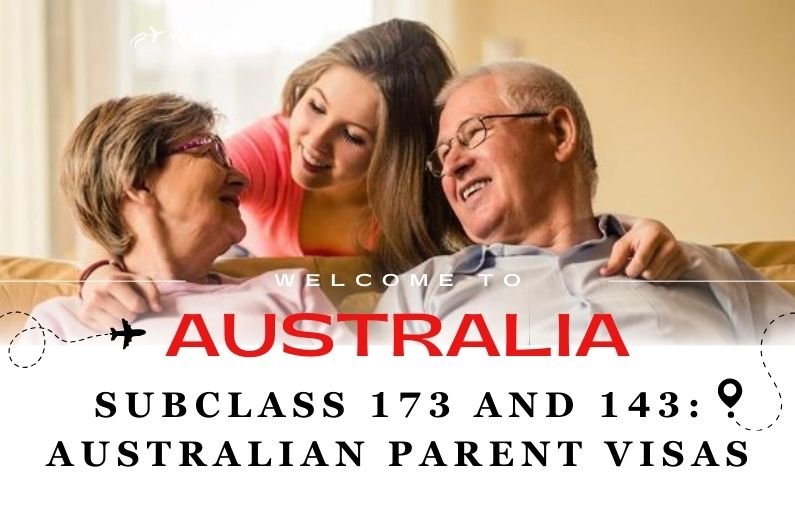
Your Guide to Subclass 173 and 143: Australian Parent Visa

Do you have aspirations of seeing your kids again in Australia? Perhaps the land of endless sunshine, breathtaking beaches, and a lively ethnic community is appealing to you. Thankfully, parent visas are available in Australia to make this dream possible. The Contributory Parent visas (Subclass 173 & 143) are examined in detail in this blog, along with the advantages they provide, eligibility conditions, and application procedures. Who Is Eligible? The status of your children and your circumstances are the main factors determining your eligibility for these visas. For you to qualify, you need to have: A Child who qualifies: Your kid must be a citizen of Australia, a lawful permanent resident, or a qualified citizen of New Zealand. Sponsorship financially: Your kid must be willing and able to support your immigration application financially. This is proving you have enough money to sustain yourself when you get there. Health requirements: To make sure you fulfill Australia’s health standards, you will need to go through a health check. Character requirements: You have to have no criminal history. Subclass 173: The Stepping Stone A two-year temporary visa is known as the Contributory Parent (Temporary) visa (Subclass 173). With the Contributory Parent (Permanent) visa (Subclass 143), it provides a route to permanent residence. What to anticipate from Subclass 173 is as follows: Benefits: During your two years in Australia, you may work and study, enroll in Medicare, the country’s public healthcare system, and apply for a permanent visa (Subclass 143) during that time. Subclass 143: For a Permanent Life Down Under  Permanent residence in Australia is granted to holders of the Contributory Parent (Permanent) visa (Subclass 143). There are many benefits to this visa: Benefits: Travel freely to and from Australia for five years from the award date (conditions apply), live, work, and study in Australia forever, and make use of Medicare’s full benefits. Route to Citizenship: You may apply to become an Australian citizen after fulfilling the residence criteria. The Procedure for Applications There are many steps involved in applying for each visa. Here’s a condensed summary: Expression of Interest (EOI): To express your desire to apply, you or your sponsored kid must submit an EOI. Invitation to Apply: You will get an invitation to apply for the selected visa subclass if your EOI is accepted. Application for Visa: This entails sending a thorough application together with all necessary supporting papers. Processing and Evaluation: Your application will be evaluated by the Department of Home Affairs about the visa requirements. Taking Prices Into Account Be advised that obtaining these visas requires a substantial financial investment. These include fees associated with applying for a visa, medical examinations, and even hiring a lawyer or migration agency. Subclass 173 vs Subclass 143: Selecting the Appropriate Route There is a way to reconnect with your kids in Australia with both visas. Which one is best for you, however, will depend on your unique situation. This summary will assist you in making a decision: Choose Subclass 173 if you would rather work in phases, want to spread out the expense of applying for a visa, and are willing to wait for permanent residence. If you satisfy the age criteria, prioritize gaining permanent residence as soon as feasible, and have the financial means to afford the upfront charges, you may choose to consider Subclass 143. Living up to the Dream of Australia Reuniting with your kids and living in Australia may be a very fulfilling experience. It’s important to have a clear grasp of the Contributory Parent visas (Subclass 173 & 143) so that you can decide whether to pursue this exciting new phase. Recall that speaking with a migration specialist may greatly raise your chances of success.


Uncategorized

Top Trending Courses for Foreign Students in Australia in 2024

Australia is a popular choice for overseas students, providing excellent professional opportunities after graduation, a cosmopolitan society, and a top-notch educational system. Selecting the appropriate course is essential if you’re thinking of studying abroad in Australia. This article examines some of the most popular developments in Australian education for overseas students in 2024, taking into account their interests and employability. Tech Savvy: An Increase in Courses Linked to Tech There are no indications that the digital revolution will slow down, and Australia is aggressively hiring qualified people to fill positions in the dynamic IT sector. This means that demand for tech-related courses is rising. One such degree that gives graduates the skills to become software engineers—a highly sought-after profession in Australia’s labour market—is a bachelor’s degree in computer science. Beyond developing software, think about cybersecurity. The need to protect technology is growing along with our dependence on it. Students who take cybersecurity courses become significant assets in a variety of industries by learning how to recognise and counteract cyber threats. Developing Infrastructure and Sustainability for Australia’s Future Australia is giving infrastructure development and sustainability practices a lot of attention. This offers intriguing chances for overseas students interested in these disciplines. Graduates with a degree in civil engineering may contribute to Australia’s ongoing infrastructure initiatives by designing and constructing vital structures including buildings and bridges. For those who care about the environment, think about earning a degree in renewable energy or sustainable development. These classes discuss the effects of climate change and look at ways to make the future more environmentally friendly. Graduates possessing these skill sets will be well-positioned for jobs in resource management, renewable energy development, and environmental conservation—all fields vital to Australia’s sustainable growth. Healthcare Heroes: The Need for Medical Professionals Is Growing The ageing population of Australia is driving the demand for licenced healthcare workers. This results in a big benefit for overseas students who want to work in the medical field. In Australia, obtaining a Bachelor of Nursing degree is a common path towards becoming a registered nurse. An essential part of patient care and healthcare delivery, nursing offers rewarding occupations with great job prospects. If you want to deal with a particular patient demographic, consider getting specialised training. The field of aged care is expanding, and a Certificate III in Individual Support may provide you with the knowledge and abilities to work as a carer, supporting Australia’s senior citizens in need. Teaching the Next Generation: A Fulfilling Career A flourishing society is built on the foundation of imparting information and skills to the next generation. International students looking for a fulfilling professional path often choose teaching degrees. Graduates with a Bachelor of Education are prepared to instruct in elementary or secondary education, influencing students’ development and strengthening Australia’s educational framework. A diploma in early childhood education and care provides openings to employment in kindergartens and childcare facilities for those who are enthusiastic about the development of young children. Here, you will have a significant impact on the upbringing and education of young children throughout these critical developmental years. Selecting the Best Path for Yourself Choosing the best course of action might be intimidating due to the abundance of alternatives accessible. Here are some important things to think about: Passions & Interests: Decide on a career path that complements your aspirations. Employability: Look into Australian employment trends and choose a degree that will provide you with the skills that employers are looking for. Future Plans: Think about whether you want to go straight into the job following graduation or seek postgraduate study. Lifestyle: Consider the campus atmosphere and location of the university you have selected. Moving Forward Studying in Australia has the potential to change one’s life. Through thorough research on popular courses, matching your academic interests with your studies, and taking employability into account, you can make an educated choice that will put you on the right track for a prosperous future in Australia. Recall that this is just the beginning. It is strongly advised that you do more research on particular colleges, course offerings, and career paths in your subject of interest. Studying abroad in Australia might become a reality if you prepare ahead and choose the appropriate courses. 

Uncategorized

Important FAQs You Need to Ask Your Migration Consultant?

Moving to an unfamiliar nation is exhilarating and scary. There are many official formalities, documentation, and personal problems to consider throughout the process.  Migration consultants can help you satisfy all moving requirements with guidance and assistance. You must ask the proper questions to maximize your lesson.  Q1. What Are Your Qualifications and Experience? Before doing anything else, research your consultant’s background. A consultant who has worked in the field and is trained may comprehend transfer regulations and procedures better. If you know their background, they may manage your issue effectively.  Q2. What Services Do You Offer? The consultant can provide anything from initial consultations to complete representation during the transfer. Ask them what services they provide and how they meet your criteria. Knowing this will help you evaluate whether the consultant can handle your whole relocation.   Q3. What Are the Costs Involved? Cost is frequently important, and they ask for a detailed breakdown of the fees for their services. Make sure you know what you’re receiving and that there are no hidden costs. Knowing the whole cost upfront may prevent future surprises.  Q4. What Are My Visa Options? An experienced migration consultant can recommend the appropriate visa for your case among the many available. Understanding visa benefits and downsides is essential for obtaining citizenship or permanent residency. Q5. What Documentation Is Required? Documentation is crucial to the transfer procedure. These documents might include your identity, income, employment history, and education. This knowledge is crucial early on since you will have plenty of time to obtain whatever you desire.   Q6. How Long Will the Process Take? Moving might take a long time and vary depending on your visa and destination. Even though it’s hard to offer specific timing, a knowledgeable consultant can estimate a decent amount of time based on prior work.  Q7. What Are the Common Challenges? Each phase of relocation has its own issues that must be resolved before completion. Finding out what difficulties most individuals have is crucial throughout the process. Your consultant should help you solve these issues and inform you about others who have succeeded.  Q8. How Do You Handle Complications? No matter how carefully you prepare, things may arise. The consultant has a strategy to handle crises that may make you feel safer. They successfully solve challenges and handle difficult circumstances that may inspire them.  Q9. What Is Your Success Rate? Even though prior accomplishments don’t guarantee future success, a high success rate may indicate a consultant’s expertise. Learning about their background may also assist you in determining how likely your migration application is to be approved.  Q10. How Will We Communicate? Clear and frequent communication is crucial. Make sure calling, texting, or meeting is convenient for both of you. Making defined communication guidelines may assist with miscommunication and keep you informed throughout the process.  Q11. What Are the Next Steps After Visa Approval? Once the visa is granted, migration continues. Ask your consultant what to do after getting your visa. You may need to plan your journey, locate a nice location to live, learn about your rights and duties in the new nation, and integrate into the society and culture.  Q12. What Support Is Available for Family Members? You should know about all the relocation aid options for your family. Talk to your expert about family cards and how they may assist your spouse or children in applying for passports. Discover what resources are available to help your family settle in.  Conclusion When selecting a relocation consultant, make an educated decision since they may greatly impact the process. You may prepare for the future by asking yourself these critical questions. Remember that a qualified therapist helps you move as well as providing services.  Migration consultants are crucial to making your goal of moving abroad a reality, so do your homework and ask the correct questions before starting. Your actions will ensure a smooth transition to your new home. 

Uncategorized

Discovering Australia- A Handbook of Various Tourist Permits

The country down under, Australia, entices tourists with its breathtaking scenery, energetic towns, and distinctive animals. A smooth admission is dependent on acquiring the appropriate visa, regardless of your travel goals—a leisurely beach vacation, an exciting outback excursion, or a visit to famous sites. By examining the many visiting visas that Australia offers, this blog seeks to streamline the process of applying for a visa. Visa for Tourists (Subclass 600): For visitors arranging recreational activities in Australia, the Subclass 600 visitor visa is the most popular option. Depending on your nationality and the particulars of your visa grant, it permits stays of anywhere from a few weeks to up to 12 months. You may take part in leisure activities like hiking or scuba diving, as well as sightseeing and visiting with friends and relatives. Characteristics of the Tourist Visa (Subclass 600): Some nations are allowed to enter more than once. Application forms are available online or at the Australian embassy or consulate closest to you. May call for further paperwork, such as evidence of money for the trip and tickets for the return trip. Authority for Electronic Travel (Subclass 601): For brief visits to Australia, a simplified visa alternative called the Electronic Travel Authority (ETA), commonly referred to as Subclass 601, is available. Short excursions or three-month business travels might make the most of it. Applying online is the only way to apply, so qualified travellers may save time and have a convenient option. The Electronic Travel Authority’s (Subclass 601) major characteristics are: Online application with quick processing time. Acceptable for up to three months of stays with multiple admissions each visit. accessible to nationals of those nations determined by Australian immigration to pose little risk. eVisitor, a subclass of 651: Particularly designed for tourists from New Zealand and several Pacific Island nations is the eVisitor visa (Subclass 651). It is comparable to the ETA in that it permits repeated entry with a three-month maximum stay for each visit. During its validity term, this visa alternative is ideal for last-minute vacations or brief business meetings. Important attributes of eVisitor (Subclass 651): Only residents of certain Pacific Island nations and New Zealanders are eligible. Streamlined online application procedure. Up to three months may be spent at a time, with multiple entries allowed. Visa for Medical Treatment (Subclass 602): The best choice is the Subclass 602 Medical Treatment Visa if you need medical attention while you’re in Australia. With this visa, you may go to Australia for medical consultations, treatment, and perhaps recovery. Remember that certain conditions for this visa have to do with the kind of therapy you are receiving and the supporting records your physician needs to provide. Principal characteristics of the Medical Treatment Visa (Subclass 602): Specifically made for anyone looking to get medical care in Australia. Possible requirements include proof of financial support and thorough medical records. Validity duration is calculated by your medical requirements. Selecting an Appropriate Visa:  Your intended destination and length of stay will determine which kind of tourist visa is best for you. The ETA or eVisitor may be the best option for a quick business trip or a leisurely holiday. The Tourist Visa (Subclass 600) or Medical Treatment Visa (Subclass 602) would be better suited for extended visits or those in need of medical care. The next actions: The Australian visa application process might be complicated, but AIM Consultants can help you through it. In addition to gathering the required paperwork and ensuring a seamless application procedure, we may assist you in selecting the most appropriate visa type. Make your Australian dream come true by getting in touch with our knowledgeable immigration consultants right now to talk about your trip arrangements.    

Scroll to Top